


Rialto Bridge, Venice
Rialto Bridge
Venice, Italy

One of the most popular sights in Venice and mentioned in Shakespeare’s Merchant of Venice

About the Rialto Bridge
The Rialto Bridge was built in three years (between 1588 and 1591). The bridge is made of Istrian stone (an impermeable limestone).
Figures carved into the bridge are the Annunciation with the Archangel Gabriel and the Virgin Mary (by Agostino Rubini) and San Marco and San Teodoro – the protectors of Venice (by Tiziano Aspetti).
The Bridge connects the San Marco and San Polo districts of Venice, Italy, across the Grand Canal. It serves as a key pedestrian crossing and is a major landmark in the city
Rialto Bridge Page Index

Rialto Bridge by Ugo Flumiani (1876-1938)

Visitor Information
Including the best time of day to visit, Rialto area tours, the nearest Vaporetto/waterbus stop and more.
Including the best time of day to visit, Rialto area tours, the nearest Vaporetto/waterbus stop and more.

History of the Rialto Bridge
All about the building of the Rialto Bridge, the designer of the bridge and St Mark & St Theodore
All about the building of the Rialto Bridge, the designer of the bridge and St Mark & St Theodore

Rialto Bridge in Art & Literature
From Shakespeare to Canaletto, the Bridge has been a popular subject for writers and artists.
From Shakespeare to Canaletto, the Bridge has been a popular subject for writers and artists.
Rialto Bridge Facts and Information
More about the history of the Rialto Bridge
More about the history of the Rialto Bridge
Visiting the Rialto Bridge
Useful Information
Powered by GetYourGuide
|
Rialto bridge |
|
|---|---|
 |
The Rialto Bridge is a public thoroughfare and is open 24/7 |
 |
Best time to visit Early in the morning or late afternoon. You can visit the Rialto markets at the same time which is better earlier in the morning. |
 |
Rialto Area Tours Rialto Market Food and Wine Lunchtime Tour Rialto Area Street Food Tour and Sightseeing |
 |
Other Tours St. Mark’s, Doge’s Palace, Rialto, and Gondola Tour. |
 |
Also in this area Rialto Markets, Church of San Polo, San Giacomo di Rialto |
 |
Nearest Vaporetto/Waterbus stop Rialto. Line 1, Line 2, Line 2 bis |
 |
Vaporetto/Waterbus Tickets Buy your vaporetto tickets online |
History of the Rialto Bridge

The present stone bridge is a single span designed by Antonio da Ponte. Construction began in 1588 and was completed in 1591.
The current bridge was designed as a permanent replacement for three wooden bridges that had spanned the Grand Canal at various times since the 12th Century and the boats that carried people across the canal. The Rialto Bridge was the only way to cross the Grand Canal on foot until the Accademia Bridge was built in 1854.
The Rialto Bridge was designed to allow passage of ships and boats beneath. It is said that is it built on 12,000 wooden pilings that still support the bridge today.
St Mark and Theodore are a common theme in Venice. On the Fondaco dei Tedeschi side of the Rialto Bridge you will find the carved figures of St. Mark and St. Theodore.
Rialto Bridge in Art & Literature

Gustaf Wilhelm Palm’s View of the Rialto Bridge (1810-1890)
For centuries the Rialto Bridge has been one of Venice’s enduring cultural symbols and has inspired painters, poets and playwrights.
Rialto Bridge in Art
In art, the bridge appears prominently in the cityscapes of Venetian masters such as Canaletto, Francesco Guardi, Giuseppe Bernardino Bison and Gustaf Wilhelm Palm (pictured here).
Today it remains a popular choice of subject for amateur and professional artists.
Rialto Bridge In Literature
The Rialto Bridge is most famously associated with William Shakespeare’s The Merchant of Venice where Salanio asks “What news on the Rialto?”.
Other writers also mention the Rialto Bridge including John Ruskin, Henry James, Thomas Mann and Charles Dickens.
Rialto Bridge Facts & Information
Powered by GetYourGuide
 |
The Rialto Bridge is the oldest of the four bridges that now span the Grand Canal, connecting the districts (sestieri) of San Marco and San Polo in Venice. |
|
The site has served as a crossing point since at least the 12th century, originally as a pontoon bridge built in 1173 and later replaced by various wooden bridges before being rebuilt in stone. |
|
The early wooden structure, known as the Ponte della Moneta, was first designed by Nicolò Barattieri, and successive versions were prone to fires and collapses because of heavy usage and structural limitations. |
|
By the mid-16th century, Venetian authorities decided that a more durable stone bridge was essential to support the city’s commercial and pedestrian traffic across the bustling Rialto market area. |
|
In a public competition of architectural proposals, the design by Antonio da Ponte—a bold single-span stone arch—was selected over other submissions, including those by prominent architects of the era. |

|
Construction of the existing stone bridge began in 1588 and was completed in 1591, making extensive use of thousands of wooden piles driven into the lagoon’s alluvial soil to support its foundations. |
|
The bridge’s single arch, spanning approximately 31–32 meters (about 100+ feet), is flanked by a broad deck carrying rows of shops, a feature that continued the long Venetian tradition of “inhabited bridges.” |
|
Historically, these shops were occupied by merchants selling goods such as spices, textiles, and precious metals, helping to finance the bridge and reflecting the Rialto area’s role as Venice’s commercial heart. |
|
The bridge’s architectural style shows the influence of the Renaissance period, combining functional design with aesthetic harmony in its clean arch and geometric balustrades. |
|
Over more than four centuries, the Rialto Bridge has endured natural events and heavy foot traffic, becoming an iconic symbol of Venice and one of the city’s most photographed historical landmarks. |
Nearby Venice Attractions
Link to: Rialto Markets

Rialto Markets
A genuine Venetian market experience
Link to: Church of San Polo

Church of San Polo
Paintings by Tintoretto, Palma the Younger
Link to: San Giacomo di Rialto

San Giacomo di Rialto
Vivaldi Instrument Collection
SAN POLO ATTRACTIONS MAP
With Place Markers

Link to: Visiting Venice Checklist

Visit Venice Checklist
Tips and information
Follow a manual added link

Airport to Venice Water Taxi
Book Your Water Taxi
Follow a manual added link
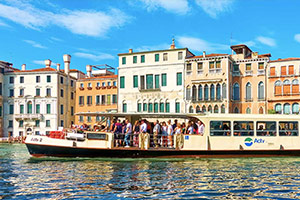
Vaporetto/Waterbus Tickets
Buy Tickets Online
Link to: Tickets & Activities

Venice Tickets & Activities
Things to do in Venice
Follow a manual added link
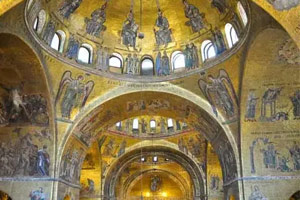
Doge’s Palace & St Mark’s Basilica
Tickets & Tours
Link to: 14 Best Hotels in Venice

Best Hotels in Venice
View the top Venice Hotels